Posts

Showing posts with the label management

The Dark Side of LLMs: part 2

Image
July 2024: I wrote the first blog post about The Dark Side of LLMs . During these 7 months, many things have changed; the usage of AI and LLMs in engineering has kept growing. LLMs and AI are cool. However, they are not a free lunch and have consequences. If you have not read the first blog post of this series, go there and read it because it will be relevant to this one. One significant open-source development in LLM was  DeepSeek .DeepSeek is interesting for two factors: one that is considerably cheaper and second that is open source. Deepseek introduced a series of optimizations like parallelism, chain of thought (COT), which step by step so we can fix the model where is wrong and usage of Reinforcement Learning (RL) along side with Destilation. RL is how robots roll and self-driving cars also move in a city.  Deepseek's being open source is great for the community; however, we also see interesting moves from big tech companies like  Meta ,  Microsoft ,  Goog...

Quality Needs to be Managed

Image
Quality often means something different to each person. My definition of quality revolves around technical excellence. To achieve this, we need good architecture, sound design based on strong principles, good code, tests in a wide variety and diversity, and proper observability. To get there, we need refactoring(a lot), and I would also include good troubleshooting and review sessions.  Quality involves not only delivering automated product deployments but also ensuring the software is maintainable. Delivering software on time is not enough, and delivering value to the customer is not enough either because people and software are expensive. We need to do better.  Quality needs to be built-in, a strong, solid lean principle. However, we don't have as many incentives to built-in quality as we do for finishing projects on time. Projects are always associated with direct value to the company, and quality is often optional and mismanaged. Quality does not mean QA, and it's way beyo...

Tagging Everything

Image
I was always a big believer in metadata and observability. Tagging is another form of observability, the idea is very basic and yet not well explored in our industry. You add metadata to a resource. Metadata is just data that describes data. Why bother? Well, at scale, there will be hundreds to thousands of resources including ec2 machines, container images, security groups, load balancers, and all kinds of applications like services, bffs, aggregators, a much more. How do you make sense of these resources? How do you know if you need them after all? Cloud computing is great but also is a big cost center. Understanding your resources is critical, not only for savings but for better infrastructure management. Tags help with cost, but they go beyond cost.  Endless Resources So let's say you have some scale, easily you can have hundreds to thousands of ec2 and dozens to hundreds of lamdas. The first question that should come to mind is ownership, how own all these resources? By not ha...

Tickets - Two sides of the same coin

Image
Tickets! Some people love them others hate them. I for sure dont have much love, however, I can see both sides of the same coin. There are lots of tracking systems such as Bugzilla, Track, Jira, GitHub Issues, and many others. There are companies with complex workflows with lots of approvals and complicated steps.IMHO there is little value in complex workflows, I understand the reasons why companies might arrive there but still think is not the way. Tickets can be used for multiple reasons, some could be valid, and others could be actually bad practices, meaning hiding inefficiencies. Let's take a look at the 2 sides of the same coin.

Holacracy

Image
Holacracy is an organization system where authority is distributed with self-organizing groups. I first heard about these ideas back in 2013 through Zappos's book . Culture is delicate and often moves much slower than technology. As generations are changing some values are slowly changing. Even COVID-19 is shaping how we live and do business. Holacracy has interesting properties, IMHO is all about the people, having the right talent might work in almost of forms of management systems, of course, the lots of great engineers don't care about what management systems they are in but others do. Today I want to share a slidecast I made sharing some ideas about Holacracy.

Teams Evolutions

Image
Every company out there works with teams. There are all sorts of teams such as teams specialized in technology stack like Hadoop or teams which are domain-driven and have cross disciplines( Cross-Functional Team ) inside such as backend, frontend, QA, UX, Architecture, and more. People don't leave companies they leave teams, also it would be accurate to say that people don't join companies and they join teams. So should we have dynamic or static teams? Should teams self-assemble or should we have PMO doing that? Should the teams be stable or should we allow dynamic reteaming? Is work always fitting well in our team's structure? What about Platform vs product teams, which one is best? Should we just pick one model or should we use different models? Should engineers organize around managers or managers organized around engineers? Teams affect Architecture and our perception of ownership. Teams should be a people organization but often is just a grouping of people where everyb...

Management: Doing the non-obvious part III

Image
Like we say in Brazil (Todo Carnaval tem seu fim) all carnival has an end. This is the end, my friend. It's the final slidecast on the series. If you did not watch  part 1 and part 2 I highly recommend you do. Part 1and 2 I covered +40 books, 20 each slidecast, and today I will cover +20 more. Total +60 books. Even if you dont agree with all ideas here I recommend you watch them because you will see common patterns and connections between books and might get some insights or reading recommendations. So Let's get started! 

Manage Work not People

Image
Lean / Kanban was always about managing work instead of managing people. Often mention as Manage the flow. Organizations are about organizing people, but they should be about organizing work instead. As organizations grow, it's harder to make an impact and easier to get benefits. Safi Bahcall, the Loonshots book, says that as organizations are growing, the perks become much easier to get rather than impact(outcomes). That's why politics and empire-building strike. Leaders need to be explicit about managing flow. Otherwise, organizations tend to focus on local hierarchies and produce local optimization(classical Lean issue).  If we should manage work/flow instead of people(Some coachs also called it to manage the system). Should we have teams? Are teams silos? Are silos always bad and wrong? When should we create a team? When should we decommission a team? Work often happens on teams, people leave and join companies because of teams, but would teams get into the way sometimes? ...

Management: The non-obvious II

Image
This is the second post on the series of management the non-obvious. I highly recommend you check out the first post . For the first post, I shared +20 books which was the base of the ideas of the first slidecast. This is the second slidecast. In this second slidecast, we will continue covering some non-traditional ideas and I will recommend +20 books again. Books are portals to other dimensions. We have several cognitive biases in our brains that work against us. We also live in a world that the bad things are repeat over and over and the good things are faiding. So it's really important to spot and think about it. Often we think we have all the answers and just need to execute something, is that so? They allow us to see things we were not seeing before. So I hope you guys like it. Let's get started.

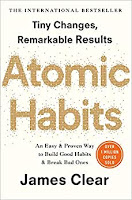
Change Autopilot Direction with Atomic Habits

Image
We often dont realize how much we run into the autopilot mode. However, is the autopilot going in the direction that we want? Are we learning what we want to be learning? Are we investing where we want to be investing? Often the answer to this question is no. So how can we change direction? Would be awesome if we had an interface like google maps or Waze where we could just type another direction that we want to go and we would be driving there? Where the direction is a goal that we want to archive rather than a place. Plans often are problematic since the world is dynamic and plans are static. So what can we do? It's possible to slowly shift to the desired direction and here is what we can do. Let's get started! 

Nine Lies about Work

Image
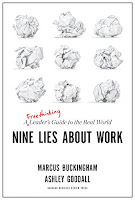
This is a pretty interesting book. I really love this kind of book where the author challenges the common sense and traditionally established truths that are not so true actually. Work is something we all do and I often think differently about it. Nine Lies about work sound arrogant but actually is not. The book is full of examples and scientific studies and argues very well on the spot. We are living a global pandemic(COVI-19) and that changed all our lives, that shows how fragile we can be. I personally was always into Lean/Agile and never was a fan of traditional management culture. So buckle up this book might shake up you a lot since will challenge traditional things like People to need Feedback. I often like feedback and worked a long time(~11 years) living strong and daily feedback however even that being a strong truth for me, the author managed to show me a different point of view(wit studies of course) and I still like feedback and strong feedback cultures but I see there are...

Management: The non-obvious

Image
Traditional management often sucks. Main because the focus is on control, time management, and micro-management. Plus, traditional management does not learn and just repeats the same process repeatedly and expects different results. I prefer modern incarnations like Coaches or even Engineering Managers.  I'm aware that Agile Coaching is a bad word in brazil because of Scams, but it does not mean it is a bad thing - It really depends on the people. People are more attached to managers than you can think. People do not know quite companies, they quite they managers. That's why management is a super important element of companies culture. Companies are complex. Complexity is everywhere; at the same often people just game the system rather than have complex and systemical thinking. So if you want to change the culture, you need to change management., Today, I would like to cover some non-obvious aspects that can deliver a better culture and, therefore, better solutions and better m...

Why Digital Transformations Fail?

Image
Around 2015 there was a huge fuss about Digital Transformation. 70% of all Digital transformations fail(According to Tony Saldanha ).  For sure, you are thinking, this is because of the lack of proper Talent Pool, or wrong technology choices. Fore sure that things matter a lot, but surprisingly the number #1 problem is lack of discipline. Lack of discipline in Defining and executing the right steps. IMHO lack if discipline is also the issue of why hard things dont get done or executed. To define and execute the right steps, you need to have VISION and know what you are doing and what problems you are fixing. If you dont understand the problems you are fixing, how do you know you are fixing the right ones? How do you know you are doing the right things? Well, often, companies don't know, or they think they know.  99.999999% of aircraft takeoffs and landings  are successful  compared with only 30% success in digital transformation initiatives. 

The need for Slack

Image
So this is not a post about Slack(IRC/Chat application) - there is nothing about instant group messaging here. Slack also means LOOSE which is the opposite of tight. We all know Debit as bad. We all know Debit slows down execution and increases maintained cost. So why do we still suffer too much about it? IMHO there are several reasons that go from Bad management, Lack of Vision, Poor Tech Talent Pool, Lack of Software Ownership and Culture. Recently I finish Upstream from Dan Heath, which is an amazing book about product discovery but also about Software Architecture and Team Organization(Because both are the same :-) ). Dan has other amazing books like Switch . Which I highly recommend it. 

Coaching is the Management

Image
Management is all about goals and compliance. It`s a very traditional approach around some ideias that really sounds wrong to me. Management is about CONTROL and make people work around a specific GOAL in the way that you can manage people to archive it. That's great but i dont think thats works anymore now a day. Because people are not bad, and people can learn new skills and you dont need manage the people you need actually managed the system/constraints and other for people not the other way around. I deeply belive in servant leadership ideias, i belive people are great and you should not try to control they, actually you should help they to archive their goals. The Soccer game it`s a great game. If you think though, the coach its not playing, he its a kind of invisible manager, working things on the backstage. Unfortunately most of companies are like the army. So they basically work around the idea that the most valuable thing is not the execution but the decision, that...